


Home NewsCompany News
Shopping mall indoor playground projects located in center atriums offer massive foot traffic, but they require a sophisticated leasing and engineering strategy to succeed.
You want to build a shopping mall indoor playground right in the center atrium. I get it. That is where the massive foot traffic is. It looks like a license to print money. But let me tell you what the mall leasing managers will not tell you: the atrium is a meat grinder for rookie investors. Property management in premium malls is absolutely ruthless. The fire codes are brutal. The engineering restrictions will make you want to quit before you even start. One wrong material, one overweight structure, or one exposed electrical wire, and your grand opening is permanently canceled. I have been manufacturing and shipping commercial playground equipment from my factory for 10 years. I do not sell cute toys. I build cash-flowing machines. If you want to survive the atrium, pass the inspections on day one, and actually make a profit, you play by the rules. My rules. Here is the exact, blood-tested blueprint my engineering team uses to secure mall approvals and maximize your ROI
Look down at the floor of that atrium. Underneath those shiny tiles is almost certainly a hollow underground parking garage or a massive basement supermarket. If your equipment is too heavy, the floor structure bends. The tiles crack. Mall management is terrified of this. They will demand your structural drawings before you even sign the lease. You must ask the property manager for the exact floor load-bearing limit. In my experience, the absolute minimum standard to safely operate a multi-level structure is 450 kg/m². If you buy a standard, heavy-steel playground off the shelf, you will fail the load test. When you hand us your mall floor plan, my factory’s engineering team does not just place equipment; we calculate the weight distribution per square meter. We engineer the base with expanded load-bearing plates and a decentralized framework. We refuse to allow concentrated stress points. By dispersing the weight across a wider footprint, we fundamentally eliminate the risk of overweight rejection. We solve the mall's biggest fear before they even ask the question.
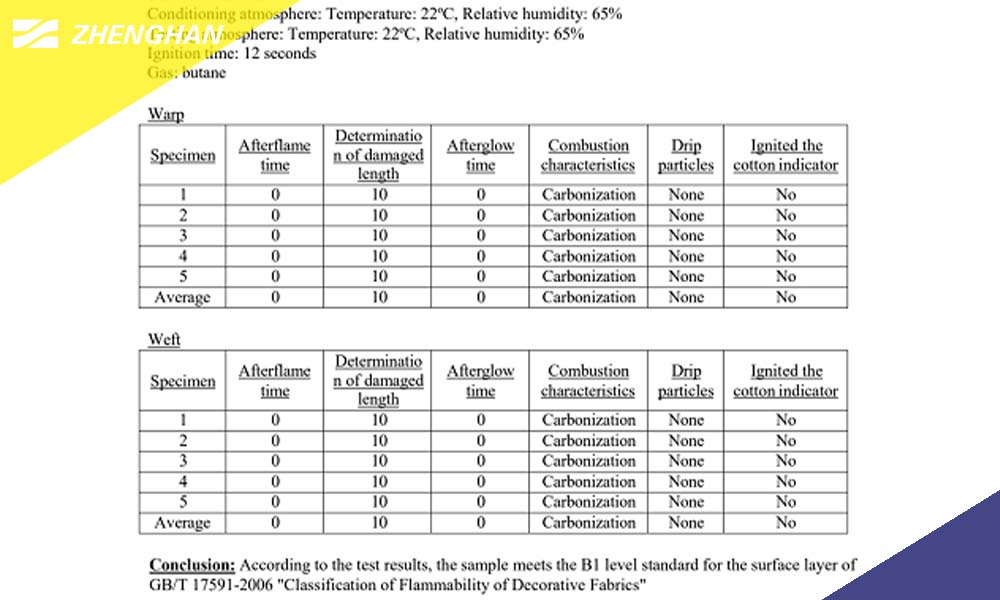
Fire safety is not a suggestion; it is life and death. The atrium is the core fire evacuation zone of the entire shopping center. Do not try to be cheap here. Let me tell you a real story. A client in France tried to bypass my advice and cut his budget. He bought a massive structure from a cheap backyard workshop. They used standard, non-flame-retardant PVC leather to save a few dollars. The day before the grand opening, the local fire marshal walked in, took a sample of the foam and vinyl, and tested it. It failed instantly. The marshal shut the site down and threatened the mall with a fine. The client had to rip the entire structure out, scrap it, and re-order compliant materials. Between the delayed opening, wasted mall rent, and dead labor costs, he lost nearly $100,000. As a premium [commercial indoor playground manufacturer] (Homepage Keyword), we do not gamble with your money. We strictly use GB Flame Retardant B1 Leather and High-Density Flame Retardant Foam. Period. Furthermore, you cannot just pack the space with equipment. Local fire laws will crush you if your escape routes are too narrow. We rigidly design the main internal aisles to be ≥ 1.2 meters wide. No matter how small the footprint, we mandate at least two separate safety evacuation doors. You either pass the fire inspection on day one, or you bleed cash.
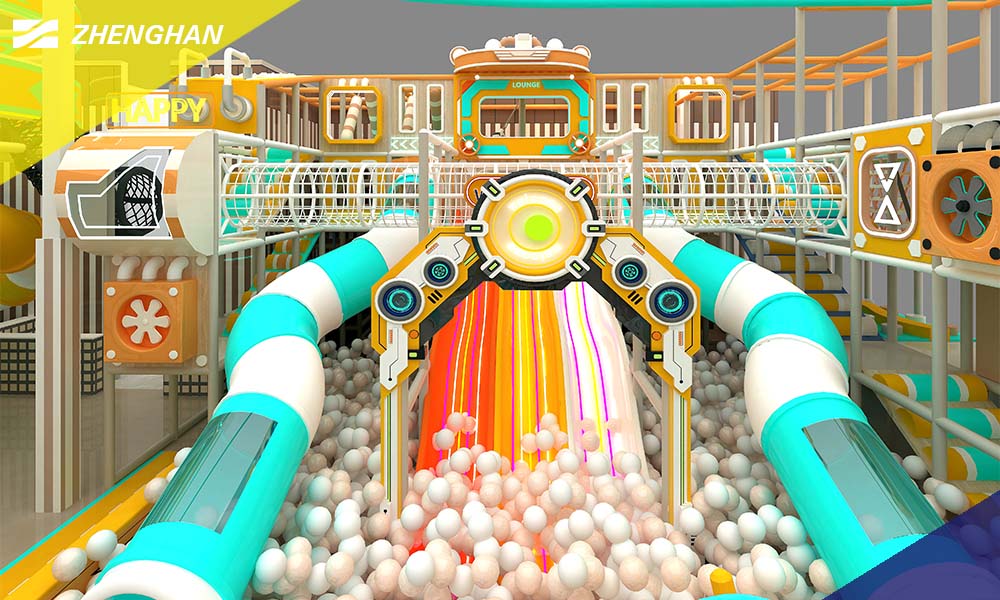
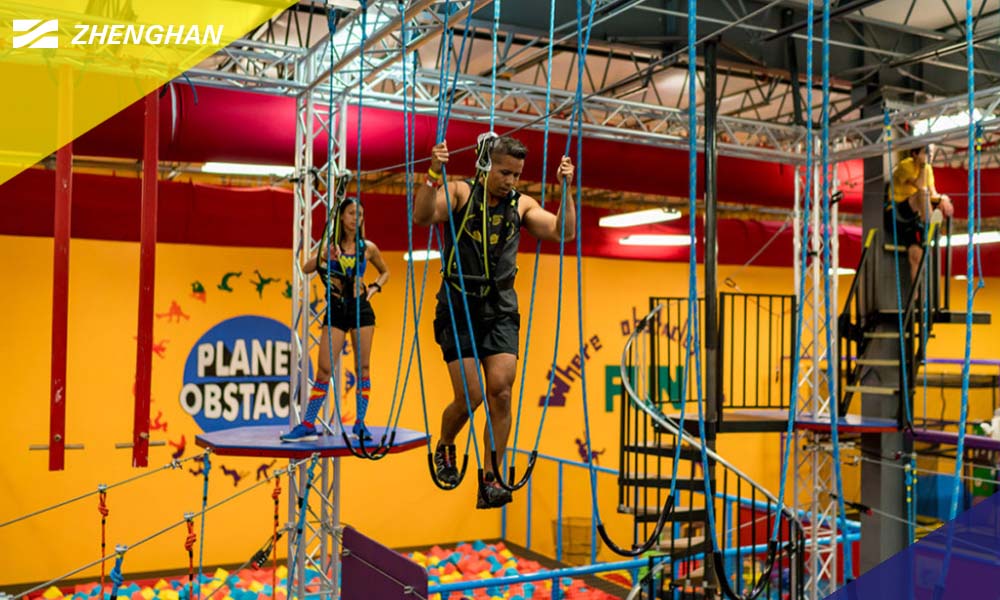
Atriums have massive, towering ceilings. Rookies think, "Great, I'll build a 5-meter-high maze and pack it with kids." If you do that, the second and third-floor retail tenants (the jewelry stores, the cosmetics brands) will scream at the property manager because your massive plastic tower is blocking their storefront visibility. The mall will force you to tear it down. The golden height for an atrium playground is strictly between 2.8 meters and 3.5 meters. So, how do we maximize your play volume without angering the mall and the surrounding shops? We use a specialized "Valley Design". We keep the perimeter structures incredibly low—mostly soft play and single-level frames. Then, we push the high-tower components, like the spiral slides and rope courses, directly into the dead center of the layout. This perfectly utilizes the vertical space for the kids while keeping the sightlines completely open for the luxury shops around you.
The atrium is a 360-degree fishbowl. Shoppers on the third floor are constantly looking down at your playground. If they look down and see a chaotic mess of exposed steel pipes, zip ties, and dust settling on cheap plastic roofs, it looks like a trash bin. Premium malls will not sign a lease with you if your equipment downgrades their aesthetic. To get the leasing manager to sign instantly, your equipment must look like a high-end architectural installation.
An atrium is an island. There are no walls to plug into. Yet, you are running thousands of watts of power for lighting, motorized merry-go-rounds, and interactive screens right in the middle of a walking zone. Mall engineers are paranoid about electrical fires and tripping hazards. If they see one "flying wire" or a cheap extension cord, you fail the electrical inspection. Here is the exact specification my factory uses to ensure you pass:
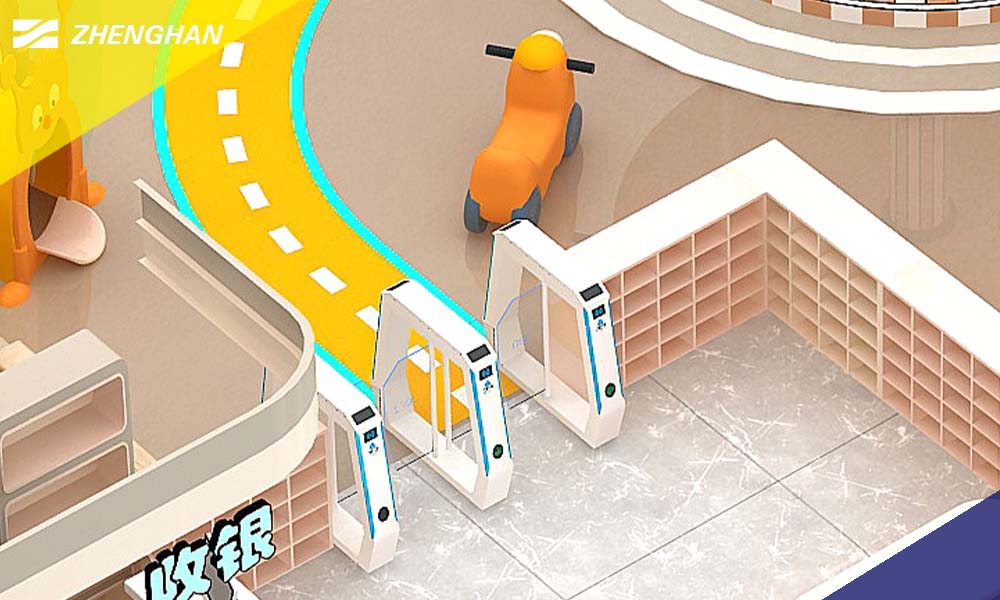
You are operating in the heaviest foot-traffic area of the mall. Kids run fast, and there are thousands of strangers walking past your playground every hour. We build your perimeter boundary exactly 1.2 to 1.4 meters high. Why this exact measurement? It is high enough to physically stop a child from climbing over, but low enough for parents standing outside to easily maintain eye contact with their kids. We use high-grade safety netting or thick, transparent acrylic panels. Never design a playground with multiple open exits. We design only ONE single entrance/exit gate, equipped with a turnstile and controlled by your dedicated staff. No child wanders off, and no unauthorized hands can reach in from the outside. In a high-traffic atrium, security is your ultimate brand currency.
When you sit down with the mall's leasing manager, do not act like you are begging for space. You have leverage. You are providing a traffic engine. Your pitch is this: "My equipment increases family dwell time by 1 to 2 hours. While the kids play, the parents are buying coffee, dining at your restaurants, and shopping at your retail stores." But to ensure you actually make money, your internal space planning must be ruthless. In a premium mall, rent is astronomical. I advise my clients to use a strict 4:6 space ratio to maximize the ROI.

Mall atriums are brutal when it comes to construction. They will not let you build during the day. You are usually restricted to working strictly between 10 PM and 6 AM. Every single night you spend installing is rent money burning in the trash, not to mention the massive cost of renting fire-proof construction barricades. Because we are a source factory, we do not ship you a puzzle of raw pipes. We pre-assemble and pre-drill the modules at our factory. Our modular frame system is violently fast to install. For a standard 300-square-meter atrium project, my experienced installation team (or your local crew following our 3D maps) can finish the entire structural build in 10 to 12 days. We cut your downtime, reduce your expensive union labor hours, and get your cash register ringing weeks faster than anyone else in the industry.
Q: Can I use standard, cheaper PVC leather to save on the initial equipment cost?
No. The mall's fire inspection will shut you down and bankrupt your project. My Experience: I have seen investors try to save $5,000 on cheap vinyl from small workshops, only to lose $100,000 in dead rent and replacement costs like my client in France. The fire marshal will test your materials. We strictly use GB Flame Retardant B1 leather and foam. Do not risk your entire investment just to save a few pennies on the surface material. It is business suicide.
Q: Will the mall allow me to build a massive 5-meter high play structure in the center?
No. You will block the sightlines of the retail tenants on the upper floors, and you will face massive complaints. My Experience: Malls survive on retail rent. If your playground hides a jewelry store's sign, the mall will force you to dismantle your equipment. We strategically cap the outer height at 2.8m - 3.5m. If you want high-altitude elements, we use our "Valley Design" to place the tall structures strictly in the dead center, keeping the edges low. This keeps the retail tenants happy and gets your drawings approved by the mall instantly.
Q: Is it safe to run a high-power playground in the middle of a heavily walked atrium with no walls?
Yes. But only if you use professional concealed conduits and independent distribution boxes. My Experience: Mall engineers are absolutely ruthless during the electrical check. If they see a single exposed wire or a cheap joint, you fail. We engineer the layout using heavy-duty floor cable trays with solid covers, industrial leakage protection, and zoned power supplies. We make sure the electricity is entirely invisible to the public so you pass the inspection on the first try.
Q: Does it really take a month to install a 300 sqm playground in a mall?
No. Our factory's modular system cuts the installation down to under a week. My Experience: Malls only let you work the night shift (10 PM to 6 AM). Paying workers for a month of night shifts will destroy your budget. To stop you from bleeding money, we pre-fit and label the structures in our factory. With an organized crew, a 300 sqm project takes just 4 to 5 nights to lock together. Time is rent, and we save you both.
Copyright © 2024 Wenzhou Zhenghan Play Equipment Co.ltd