


Home NewsCompany News
Operating a micro-park leaves zero room for error. You cannot afford dead corners. You cannot waste floor space on flashy illusions. If you simply shrink down the layout of a mega-park and cram it into a tiny room, your traffic flow will collapse, your capacity will hit a wall, and your business will bleed cash.
I have spent 10 years manufacturing and exporting commercial playground equipment across the globe. I build parks that generate reliable, long-term revenue. Today, I am going to rip apart the amateur advice you read online. Here is the exact blueprint to layout a micro-park, choose the specific equipment that generates cash flow, and avoid the traps unqualified suppliers use to secure your deposit.
1. The Vertical Profit Strategy (Navigating Height Limits)Amateurs assume a 3-meter ceiling is absolutely required to build a profitable two-level structure. While 3 meters is our golden standard to comfortably maximize vertical space, a lower ceiling does not mean the project is dead. It just requires custom engineering from a source manufacturer.
If only part of your ceiling is low, I design a split-level layout to bypass the overhead obstacles. We route the climbing paths around your HVAC ducts, sprinkler heads, and concrete beams, turning architectural flaws into unique exploration tunnels.
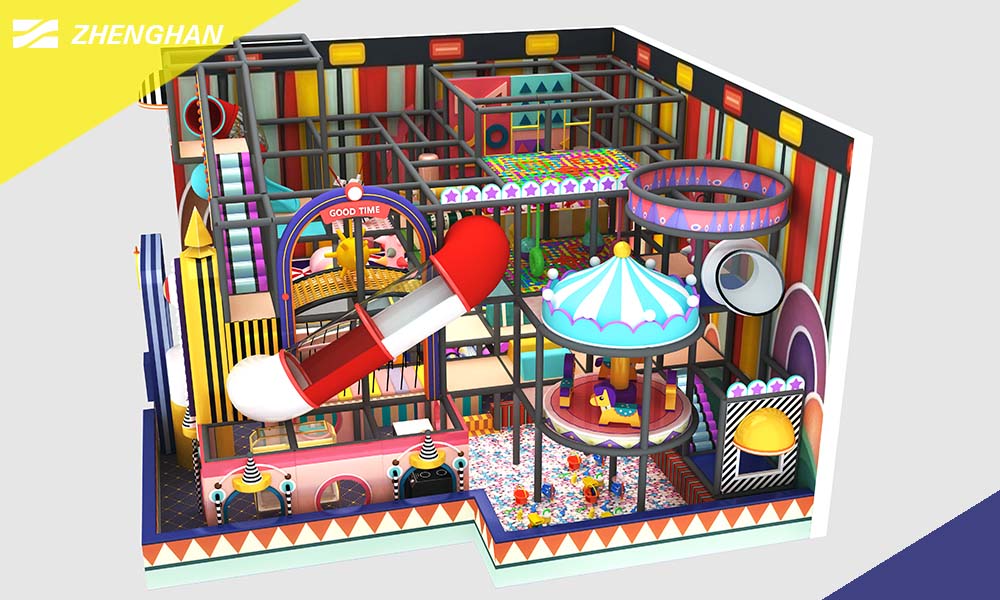
If your entire room is under 3 meters, we evaluate the situation based strictly on your target demographic. We can strategically compress the height of each internal structural level to fit your room. This works perfectly if you are targeting toddlers (0-6 years old). A 1.2-meter internal deck height provides plenty of room for a four-year-old to explore safely without hitting their head.
However, compression has a hard physical limit. If an inexperienced factory blindly forces a two-level metal frame into a 2.8-meter room just to close a deal, it becomes a claustrophobic cage. Worse, it creates a critical hazard where an adult physically cannot enter the structure to rescue a crying child. Parents notice this immediately and destroy reputations online. If compressing the levels compromises adult access or safety in any way, I brutally cut the traditional metal framework from the plans. Instead, I pivot your design to a high-profit layout using premium, low-profile ground equipment. We adapt the engineering to fit your specific space, rather than forcing a generic catalog design where it physically does not belong.
Most small parks fail because they choke their own traffic flow just to squeeze in one extra plastic slide.
In commercial playground design, our strict factory standard is 3 square meters per child. This is the absolute minimum for a safe, comfortable play experience. If your venue is 200 square meters, your absolute maximum capacity is roughly 66 children. If you try to squeeze 100 kids into that space to sell a few more daily tickets, you trigger operational chaos. Kids collide. Parents panic. The noise echoes uncomfortably, and your premium brand image instantly degrades into a chaotic, low-end facility.
To handle this capacity safely, your traffic flow must be flawless. You must implement a strict "single entry, single exit" layout. We never put the cash register and the playground entrance gate on the exact same side of the room. When a mother is trying to scan her membership card while another mother is trying to pull her crying child out of the play zone, they crash into each other, creating a bottleneck. We place the ticketing desk and the play entry on opposite ends of the reception zone. We keep the money flowing in one direction and the exiting traffic flowing in another.
When operating in less than 200 square meters, you cannot afford equipment that eats floor space without generating high repeat visits. Every square meter must justify its existence.
First, I forbid my clients from putting large commercial trampolines in micro-parks. Large trampoline courts are amazing for massive facilities. In a small space, they are parasitic. They consume huge amounts of precious floor space, demand massive overhead clearance, and leave the rest of the park looking empty and uninspired.
Second, delete the "Devil Slide" from your wish list. Investors love the idea of a massive, 90-degree drop slide to create a marketing hook on social media. A proper commercial drop slide requires a starting platform height of at least 4 to 5 meters. More importantly, it requires a massive, unobstructed run-out buffer zone at the bottom to stop the children safely. You will waste 20 square meters just on the deceleration mats for one single slide. In a 150-square-meter room, giving up that much footprint for a single 10-second ride destroys your revenue per square meter.
To actually make money in a tight space, you must invest heavily in premium soft play equipment.
You need a multi-level soft play maze. This is the financial engine of your small space indoor playground. It takes up a tiny physical footprint on the floor, but it multiplies your play volume by going vertical. We pack these frames densely with web crawls, V-bridge crossings, punching bags, and enclosed spiral slides. This equipment caters to multiple age groups, safely absorbs the kinetic energy of dozens of kids simultaneously, and rarely requires maintenance downtime.
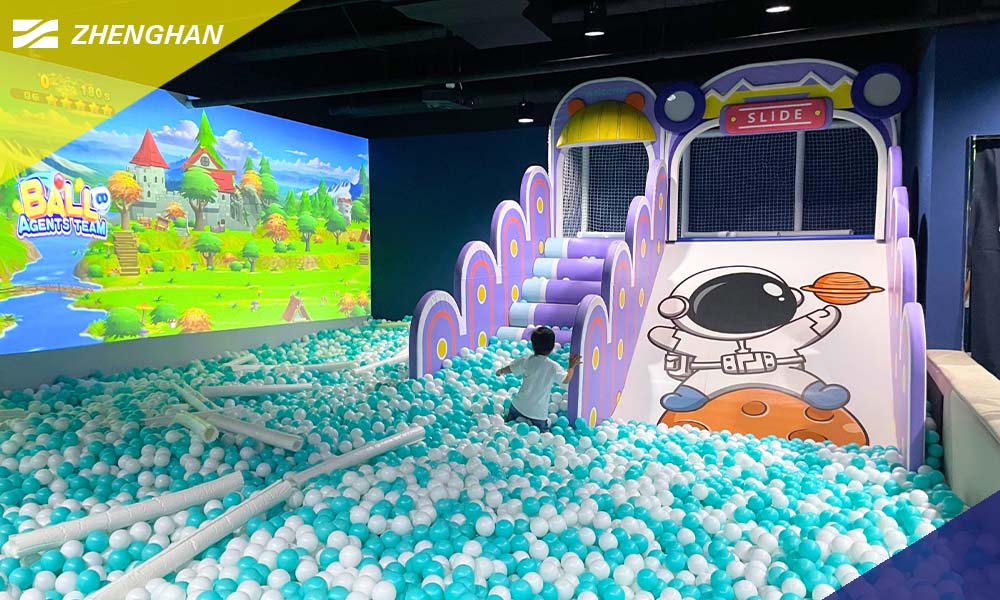
Next, you must dominate the walls. Ground space costs rent; wall space is free. We install high-end interactive projection systems on blank perimeter walls. Kids throw soft balls at the projected monsters or pop virtual balloons. It requires zero floor footprint. It adds a massive layer of high-tech gamification to your park. Kids get addicted to the visual and audio feedback, they stay longer, and they beg their parents to come back the next day.
Children do not carry credit cards. Parents do. If a mother is uncomfortable, she will grab her child and leave after 30 minutes. If she is comfortable, she stays for two hours, buys premium coffee, and purchases a highly profitable monthly membership.
However, providing that comfort creates a spatial dilemma. In a 150-square-meter room, wasting 30 square meters on a dedicated lounge with oversized couches is financial suicide.
We solve this with the "Zero-Footprint Lounge." We utilize the perimeter. We design custom, high-density PU leather bench seating that runs right along the safety walls of the play structure. The top is a padded seat for the parents; the bottom is a structural cubby hole for shoes and bags. Two functions, one footprint.
On top of that, we build a micro-bar directly into the side of the reception desk. It takes up barely 3 square meters, yet it allows you to sell high-margin lattes, bottled water, and pre-packaged snacks. The parent sits at the bar, plugs their phone into the integrated USB ports, watches their kid play, and spends more money. You monetize the waiting time.
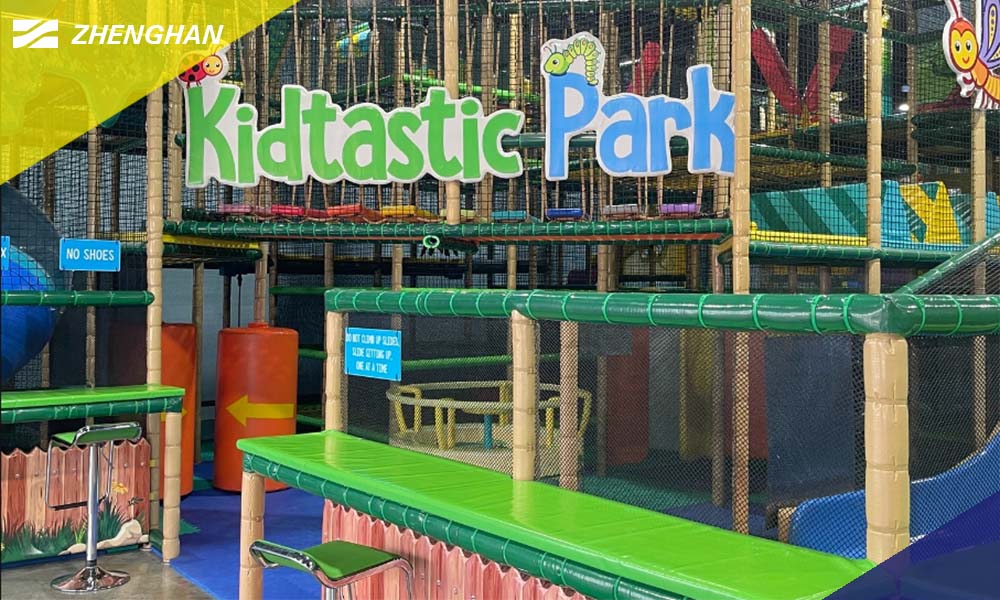
Every budget-friendly commercial lease comes with a catch. Usually, it is a massive, ugly concrete weight-bearing column sitting right in the middle of the floor plan. Amateurs view this as a design disaster. I view it as a structural anchor point.
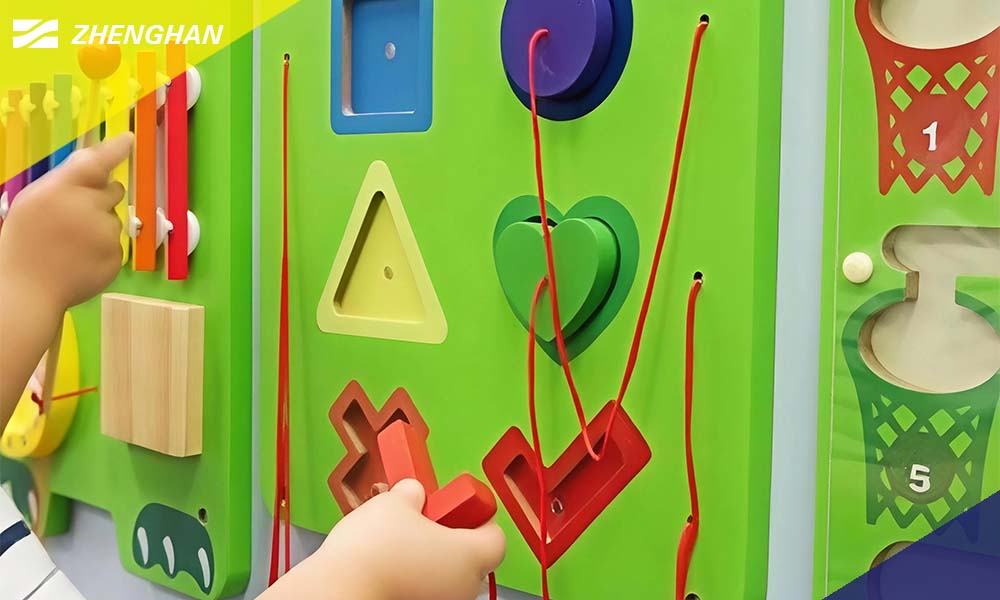
We never leave a column bare. We wrap the entire pillar in high-density, commercial-grade EVA foam and cover it in marine-grade, waterproof PVC leather. We turn the base into a circular seating area for parents. We mount tactile activity panels—gear walls, pin-screens, or magnetic puzzles—directly onto the padded column at the child's eye level. That dead concrete pillar transforms into a 360-degree interactive play station that generates value.
Searching Google for playground equipment suppliers yields hundreds of bottom-tier trading companies offering unbelievably low prices. You send them your 150-square-meter floor plan. Two days later, they send back a 3D design packed with 50 different play events.
This is a tactic called CAD stuffing.
Unverified factories do this to inflate the invoice. They intentionally scale down the 3D models of the equipment so it visually fits on the digital floor plan. When that 40-foot shipping container arrives at your door, the nightmare begins. You start bolting the steel together, and you quickly realize the slide hits the opposite wall. The pathway between the ball pit and the merry-go-round is only 30 centimeters wide. An adult cannot physically walk through the park. You have to throw away $5,000 worth of equipment just to make the park functional.
We design in exact 1:1 scale. If it does not fit safely, we do not draw it. Period.
The smaller the venue, the harder the fire inspection. Packing a tiny room full of substandard, uncertified plastic and foam guarantees the local fire inspector will lock your doors before you sell your first ticket.
I have seen investors lose their initial capital because they ignored fire codes to save a few dollars on materials. Here are the absolute factory mandates for micro-parks:
Aisles: Main egress pathways must be a minimum of 1.2 meters wide. We never let equipment encroach on this space.
Exits: You must secure two independent emergency exit doors. Never block one with a shoe rack or a vending machine.
Materials: Every single piece of foam, zip-tie, PVC leather, and safety netting we ship carries strict SGS, ASTM, or EN-71 fire-retardant certifications. It will self-extinguish when exposed to a flame.
Wiring: Zero exposed electrical wires. Every LED strip and interactive toy is wired through heavy-duty, fire-rated PVC conduit hidden deep inside the steel framework.
In a space this small, specialization is mandatory. Attempting to entertain 12-year-old teenagers and 3-year-old toddlers in the same 200-square-meter room results in teenagers running over toddlers, angry mothers, and a collapsed business model.
For small footprints, aggressively target the 0-6 age bracket. Toddlers do not require extreme heights or high-speed drop slides. They require sensory engagement, soft textures, and safe exploration. Parents of toddlers are the easiest demographic to convert into recurring members. They are actively looking for safe, clean, enclosed spaces in their local community to exhaust their kids' energy. Build a premium toddler park, maintain flawless hygiene, and your monthly memberships will sell out rapidly.
Let's look at the real numbers. What does a premium, heavily engineered 150-square-meter park actually cost?
Hiring a high-end factory like ours means your equipment and customized interior play structures will run approximately $20,000 to $25,000 USD.
Buying from a bottom-tier supplier costs roughly $12,000 upfront. However, you will spend $30,000 replacing torn vinyl, fixing broken joints, and settling injury lawsuits a year later.
Investing the $20,000 upfront for premium commercial equipment, securing a fair lease in a local community mall, and executing the micro-bar strategy creates incredibly strong numbers. In a standard market, accounting for rent, staffing, and utilities, a properly designed micro-park hits its break-even point and returns the initial capital in 8 to 10 months. After that, the high margins of the soft play industry kick in.
Stop looking for the absolute lowest quote. Start looking for the design that actually fits your space and generates revenue.
1. Can I force a giant Devil Slide into my 150sqm floor plan just for marketing? No. It destroys spatial proportions and creates a massive safety liability.
My Experience: A Devil Slide requires at least a 5-meter ceiling and a massive, elongated run-out buffer zone. Forcing it into a small footprint requires compressing the run-out mats. A child comes flying down the steep incline, runs out of deceleration space, and slams directly into the perimeter wall. We refuse to design unsafe velocity traps in micro-parks.
2. An unqualified supplier told me they can compress the equipment closer together to fit more items. Is this safe? Absolutely not. That is 3D CAD fraud, and it fails inspection.
My Experience: Shady factories manually shrink the CAD dimensions of their equipment to make it look like 50 items will fit in a room. During assembly, clients realize there is zero space between the ball pit and the carousel. Parents cannot walk through, and the layout fails the 1.2-meter fire aisle code. We strictly design in 1:1 scale. What is on the blueprint is exactly how it physically fits in reality.
3. Since my space is so small, can I skip having a second emergency exit to fit more equipment? No. The fire marshal shuts down facilities that do this on opening day.
My Experience: Commercial building codes mandate at least two points of egress for any high-density indoor amusement space, regardless of size. A past client tried to block a rear exit with a climbing wall to maximize play space. The inspector failed them instantly. Safety codes are non-negotiable. We design around the exits; we never block them.
4. Are interactive projection games really worth the money, or are they just a gimmick? Yes. They are the ultimate zero-footprint revenue generators.
My Experience: In a 200sqm room, floor space is the most expensive asset. Interactive wall projections require exactly zero floor space. Yet, they provide high-energy, gamified feedback that toddlers actively engage with. When physical space is limited, utilizing digital elements increases the replay value of the room. It is the fastest way to convince a parent to upgrade from a day pass to a monthly membership.
5. Is a $20,000 equipment budget too low for a 150sqm space? Will the quality be bad? No. Not when buying directly from a premium source factory.
My Experience: Spending $20,000 on oversized, useless machines that do not fit the demographic is a waste of capital. Working directly with a veteran manufacturer optimizes the budget. We eliminate expensive space-wasters and funnel that $20,000 directly into ultra-dense, multi-level soft play structures and premium fire-retardant materials. This provides higher play density, not lower quality.
Copyright © 2024 Wenzhou Zhenghan Play Equipment Co.ltd